
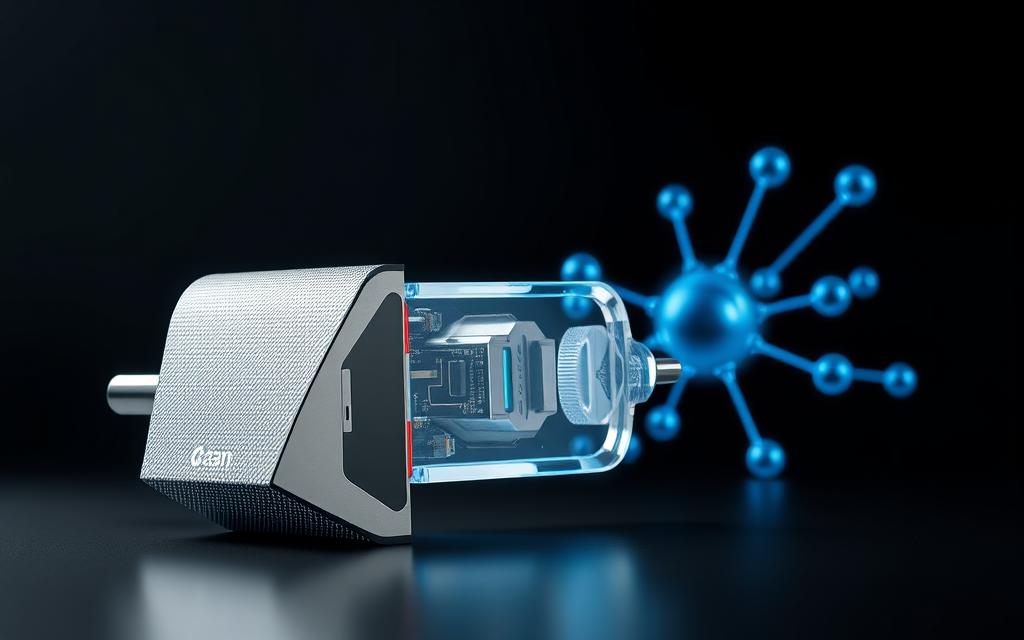
Power adapters have changed a lot with gallium nitride semiconductors. This new material is a big step up from old silicon-based ones.
Gallium nitride is better at handling electricity. It moves electricity faster and loses less energy than silicon.
This gan charging technology does more than just save energy. It makes devices smaller, cooler, and more powerful. This solves many problems of old charging methods.
Knowing what is gan helps us see why these chargers are the future. They offer real benefits for daily use.
This article will dive into how a gan charger works. We’ll look at why it’s important for today’s electronics. We’ll also explore the science behind gallium nitride’s benefits and its uses in the real world.
Understanding Gallium Nitride Semiconductor Technology
Gallium nitride is a big step up from silicon in semiconductors. It offers better performance in power electronics. This wide bandgap semiconductor technology has changed the game.
The Fundamental Properties of Gallium Nitride
Gallium nitride has amazing semiconductor properties for high-performance uses. Its wide band gap of about 3.4 electron volts means it can handle more voltage than usual materials.
It also has great electron mobility and thermal conductivity. This lets gan semiconductor devices work well at high temperatures. The high critical breakdown voltage makes it reliable in tough power applications.
Related Posts:
- How Technology Has Affected Culture Shaping Modern…

- A Technological Innovation in Healthcare…

- How Does Plasma Technology Work From TVs to Medical…

- How Technology Negatively Affects Social Skills The…

- Should We Use Technology in the Classroom The Modern…

- Haven Technologies New York A Look at the Insurance…

The crystal structure of gallium nitride makes it very stable under electrical stress. This stability helps it switch faster and lose less energy during use.
How GaN Differs From Traditional Silicon Semiconductors
The gan vs silicon comparison shows big differences in performance. Silicon transistors switch at a few hundred kilohertz. But GaN devices can switch at several megahertz.
This means GaN is more efficient at power conversion. Its wider band gap lets it handle higher voltages and has less leakage current. These benefits make GaN great for small, high-power devices.
Thermal management is another key difference. GaN’s better thermal properties help it dissipate heat better. This means less need for cooling systems in electronic devices.
The material’s high electron saturation velocity also means faster switching. This is very useful in today’s fast-paced power delivery systems.
What Is GaN Technology in Chargers
The shift from big power bricks to slim chargers is huge. GaN technology leads this change. It makes charging more efficient and smaller.
The Evolution of Charger Technology
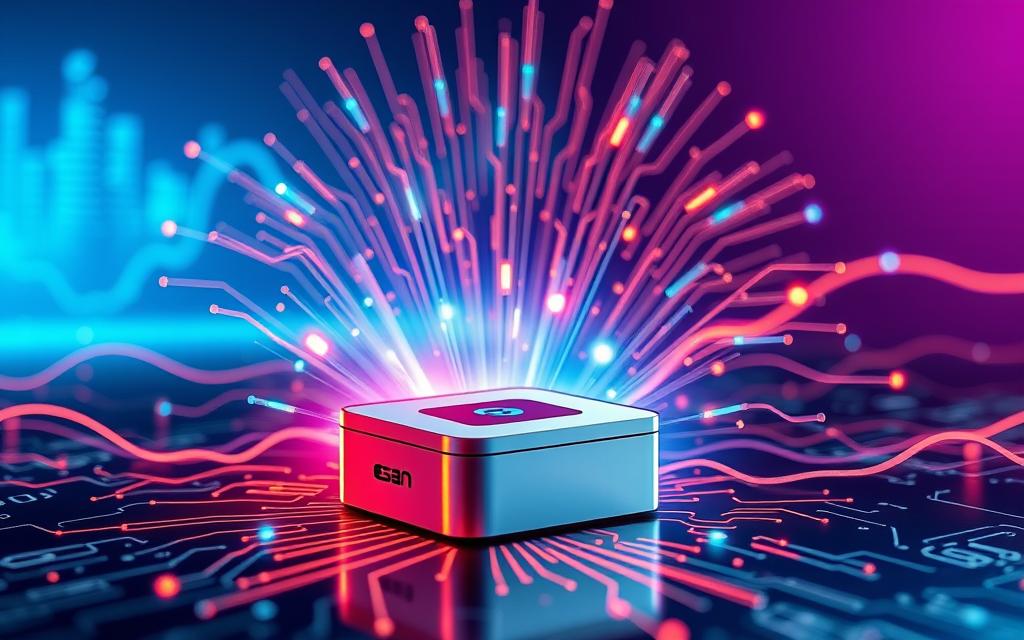
Charger tech has changed a lot in recent years. First, chargers were big, made by specific brands, and got very hot. They turned high-voltage power from the wall into low-voltage power for devices.
At first, silicon was used because it was well-known and easy to make. But silicon had limits that made chargers big and heavy. New materials changed this.
Now, chargers work with many devices thanks to USB Power Delivery. This makes charging a key feature, not just an extra.
GaN’s Role in Modern Power Delivery Systems
Gallium Nitride semiconductors power today’s chargers. They work better than silicon at high speeds and don’t get as hot. This lets chargers be small and powerful.
With USB PD GaN, chargers can talk to devices and adjust power. This makes charging faster and safer. It’s a big step up from old chargers.
GaN lets makers create chargers that are tiny but pack a lot of power. This is a big change for what we expect from chargers.
GaN also makes it possible for chargers to charge many devices at once. This means you can charge your laptop, tablet, and phone all at once with one charger.
The Efficiency Advantages of GaN in Charging Applications
Gallium Nitride technology changes how we charge devices. It offers big improvements in efficiency. These chargers work better in everyday use.
Reduced Energy Loss and Heat Generation
GaN semiconductors have lower resistance than silicon. This means they convert power more efficiently. They waste less energy.
They can handle high voltages without losing much energy. Tests show they’re up to 95% efficient. Silicon chargers are 85-90% efficient.
This efficiency means less heat is wasted. Users get cooler chargers and save on electricity.
Superior Thermal Performance Characteristics
GaN stays stable in different temperatures. This is better than silicon. It works well even when it’s hot.
Designs for heat management help GaN even more. Engineers use special techniques to keep it cool.
Thermal Conductivity Comparisons
GaN is better at moving heat than other materials. This helps keep it cool. It’s good for devices.
Here’s a table showing how different materials compare:
| Material | Thermal Conductivity (W/m·K) | Maximum Operating Temperature (°C) | Band Gap Energy (eV) |
|---|---|---|---|
| Gallium Nitride (GaN) | 130 | 300 | 3.4 |
| Silicon (Si) | 150 | 150 | 1.1 |
| Silicon Carbide (SiC) | 490 | 200 | 3.3 |
Heat Dissipation Mechanisms
GaN chargers use many ways to stay cool. They have special PCB designs. These designs help spread heat.
They also use aluminium heatsinks. Some use materials to help transfer heat. This keeps the device cool.
They often don’t need fans. GaN’s natural cooling is enough. This keeps things quiet and cool.
How GaN Enables Faster Charging Speeds
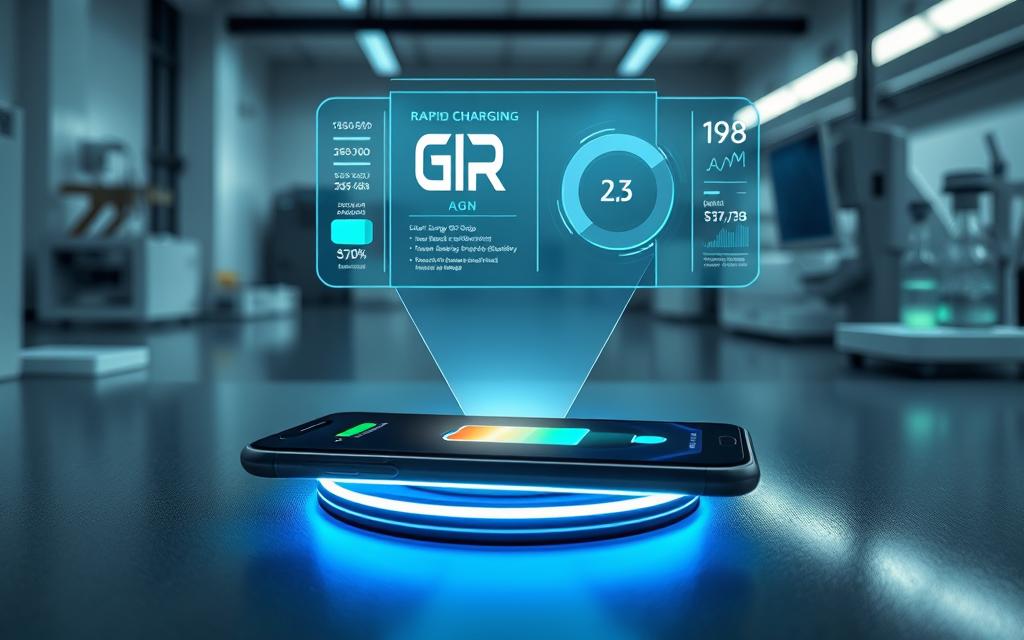
Gallium Nitride technology changes how we charge devices by making it much faster. Unlike old silicon chargers, GaN chargers use better materials for faster charging. This section looks at how GaN makes charging quicker.
Higher Switching Frequency Capabilities
GaN transistors switch at much higher speeds than silicon ones. They can switch at several megahertz, while silicon is stuck at kilohertz. This means they can convert power more efficiently.
Because of this, GaN chargers can be smaller but pack more power. This makes them great for charging big devices quickly. You can charge phones, tablets, and laptops fast.
These chargers can go up to 100W+. They make charging fast, so you don’t have to wait long. This is perfect for charging many devices at once.
Power Delivery Optimisation
GaN tech supports advanced charging like USB Power Delivery (PD) and Programmable Power Supply (PPS). These systems talk to devices to find the best charge speed. They make sure devices charge safely and quickly.
GaN chargers adjust power based on what the device needs. This keeps batteries healthy and charges them fast. You get to charge your devices quickly without worrying about safety.
| Charger Type | Switching Frequency | Maximum Output | Charging Time (0-50%) |
|---|---|---|---|
| Traditional Silicon | 50-100 kHz | 30W | 35 minutes |
| GaN Technology | 1-3 MHz | 100W | 18 minutes |
| Premium GaN | 5+ MHz | 140W | 12 minutes |
The table shows how GaN is better at charging. It charges faster because it switches at higher speeds. This makes GaN chargers great for quick top-ups.
GaN ensures devices charge as fast as they can. It’s a big step up in charging tech. Now, you can charge all your devices quickly.
Size and Weight Benefits of GaN Chargers
GaN chargers are smaller and lighter than traditional silicon chargers. They are not bulky like old power bricks. This is because GaN technology allows for more efficient power conversion in smaller sizes.
Component Miniaturisation Opportunities
Gallium nitride’s high electron mobility means it can switch faster than silicon. This leads to smaller passive components in chargers. Transformers, capacitors, and inductors get smaller but keep their performance.
GaN can handle higher temperatures, which helps make components smaller. This means less space is needed for cooling systems. Engineers can pack more into a smaller space.
Studies show GaN power systems need up to 40% fewer parts than silicon ones. This makes chargers smaller and lighter. It’s a big change in how power supplies are designed.
Portability Advantages Over Traditional Chargers
A compact GaN charger is often smaller than a deck of cards. It fits easily in pockets or small bags. This is a big improvement over silicon chargers that take up more space.
GaN chargers are also much lighter than silicon ones. This is great for travellers and mobile workers who want to save weight. The small size and light weight make the charger easy to carry.
Tests show GaN chargers can be up to 50% smaller than silicon ones but deliver the same power. This means you don’t have to choose between speed and convenience. The compact GaN charger offers both, changing what we expect from power adapters.
Being portable isn’t just about size. It also means better cable management and storage. Many chargers come with folding prongs and detachable cables. These features make travel easier and fit well with GaN technology’s benefits.
Environmental Impact and Energy Savings
GaN technology brings many benefits, like faster charging and smaller sizes. It also helps the environment in big ways. Gallium nitride chargers are more efficient, leading to big ecological wins.
Reduced Carbon Footprint
GaN chargers save a lot of energy. They use less power than old silicon chargers. This means they waste less energy as heat.
Using GaN chargers can cut down on CO2 emissions a lot. For a family with many devices, it can save hundreds of kilograms of CO2 each year. This is very important in places where most electricity comes from fossil fuels.
As one study says:
“Widespread adoption of GaN technology could reduce global consumer energy consumption for mobile device charging by up to 30% within the next decade.”
Long-term Energy Efficiency Gains
GaN chargers keep working well over time. They don’t get less efficient like old chargers do. This means they save energy for years.
Companies are making GaN chargers because they’re good for the planet. They make less heat, which means devices last longer. This also means less waste and less harm to the environment.
GaN chargers are a smart choice for those who care about the planet. They work better and last longer, helping to make our world more sustainable.
Technical Implementation in Charger Design
GaN chargers combine materials science and electronic design. They use gallium nitride technology for their high performance. This technology is at the heart of their advanced power delivery.
GaN FET Architecture in Power Conversion
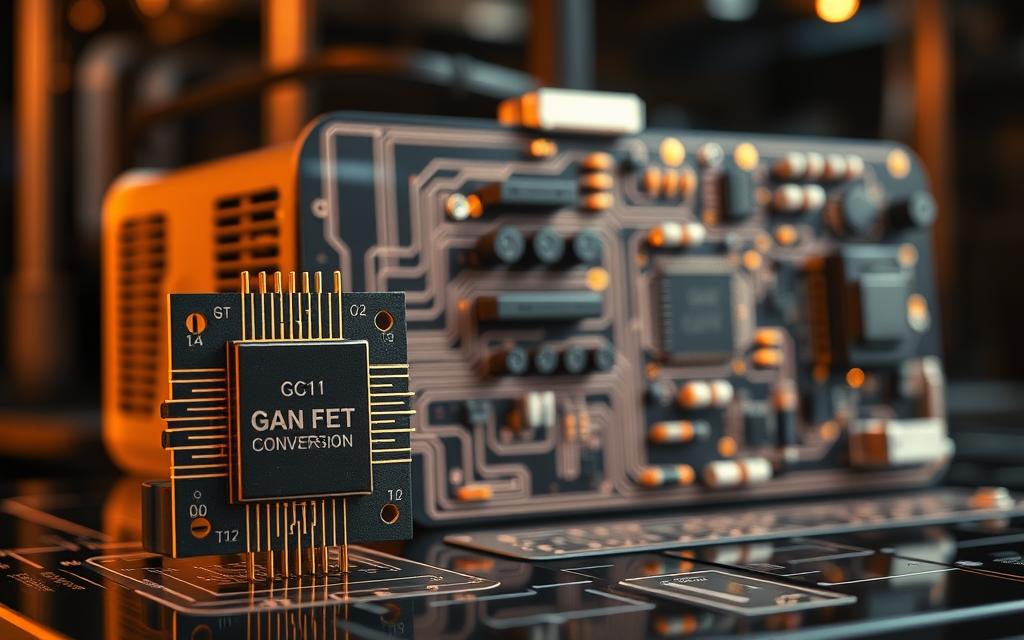
Gallium nitride field-effect transistors are key in modern chargers. They switch faster and more efficiently than silicon-based components. This leads to better performance in power conversion.
GaN transistors can handle high voltages and temperatures well. They use GaN’s wide bandgap to switch at frequencies silicon can’t. This makes them very efficient.
Circuit Design Considerations
Designing circuits for GaN chargers is complex. Engineers must consider the faster switching speeds and different gate driving needs. They also need to lay out circuits carefully to avoid performance loss.
Using GaN in chargers requires expertise in power electronics. It’s important to manage heat well, even though GaN generates less. This ensures the chargers are reliable and efficient.
Topology Selection for GaN Systems
Choosing the right power conversion topology is key for GaN chargers. Designers pick based on the application and power level. Flyback converters are good for lower power, while resonant converters are better for higher power.
Each topology has its own benefits with GaN. For example, resonant converters use high frequencies to make components smaller. The choice depends on cost, complexity, and performance goals.
Control System Integration
Advanced control systems are vital for GaN chargers. They manage switching timing, monitor temperature, and control power delivery. Sophisticated algorithms ensure the chargers perform well under different loads.
These systems also include protection features like over-voltage and over-current detection. They keep the charger and devices safe. Smart control features allow for charging that’s tailored to different devices.
| Design Aspect | Traditional Silicon | GaN Implementation | Performance Improvement |
|---|---|---|---|
| Switching Frequency | 50-100 kHz | 200-500 kHz | 4-5x Increase |
| Power Density | 5-7 W/cm³ | 15-25 W/cm³ | 3-4x Improvement |
| Efficiency at Full Load | 85-88% | 92-95% | 5-7% Gain |
| Thermal Rise | 35-45°C | 20-30°C | 30-40% Reduction |
GaN chargers are the result of combining GaN FETs, careful circuit design, the right topology, and advanced control systems. This approach makes chargers more powerful, efficient, and compact than before. Users get the best technology available.
Market Adoption and Leading Manufacturers
The GaN charger market is growing fast. This is because of gallium nitride’s better properties. Silicon chargers are more common, but GaN is gaining ground in gadgets and work tools.

A recent study on GaN chargers shows they will keep growing. People want chargers that are efficient and easy to carry. This demand is driving the market forward.
Industry Leaders in GaN Charger Production
Some big names are leading in GaN charger development. Anker Gan is known for its PowerIQ tech and small designs. Their Nano series shows how GaN can make chargers smaller but just as powerful.
Ugreen Gan is also popular for its multi-port chargers and good prices. Other leaders include Baseus, Samsung, and Apple. They’re all adding GaN tech to their products.
These industry leaders are always improving GaN chargers. They focus on keeping them cool and making them more powerful.
Current Market Penetration and Trends
GaN chargers are a small but growing part of the market. They were first popular with high-end users and tech fans. But now, they’re more affordable for everyone.
There are a few big changes in the market. Chargers with over 100W are becoming common. Also, chargers that can charge many devices at once are popular.
More and more products are using GaN technology. This includes power stations, laptop docks, and car accessories. It shows GaN’s wide range of uses.
The market is changing fast. New companies are joining, and old ones are getting better. But, many people don’t know about GaN’s benefits yet.
Real-World Performance Comparisons
Technical specs are important, but real-world performance is key. This section looks at how GaN chargers stack up against silicon ones in daily use.
GaN vs Silicon Charger Efficiency Metrics
GaN and silicon semiconductors differ in how they handle power. GaN’s wider band gap means it converts power more efficiently, wasting less as heat.
GaN chargers usually have an efficiency of 92-94%. Silicon chargers top out at 85-88%. This small difference adds up to big energy savings over time.
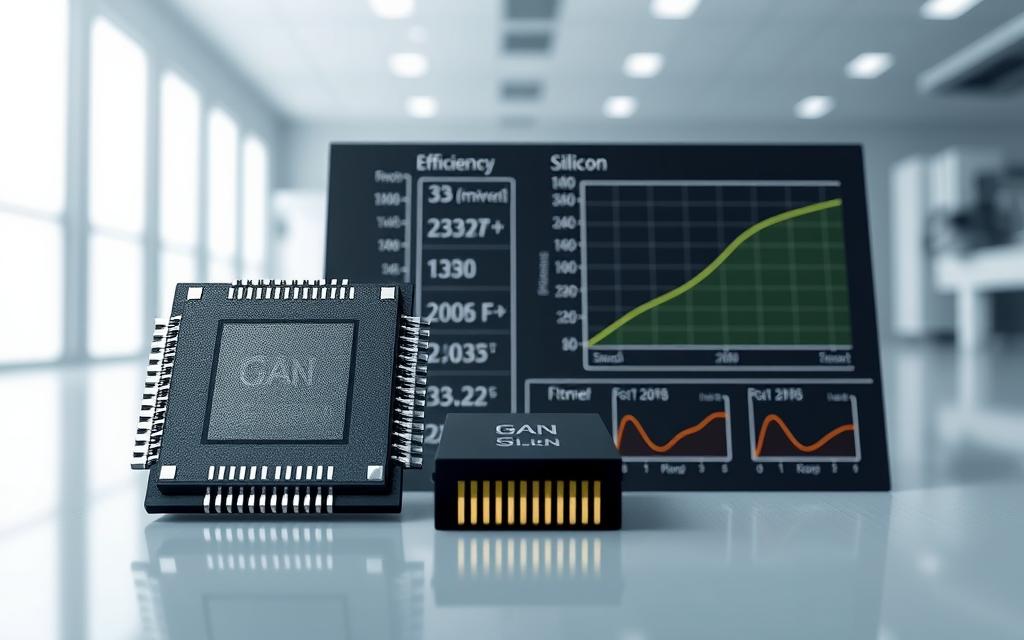
GaN chargers stay cool under heavy loads. Silicon chargers slow down when hot. GaN keeps delivering power steadily.
| Property | Gallium Nitride (GaN) | Silicon (Si) |
|---|---|---|
| Band Gap (eV) | 3.4 | 1.1 |
| Critical Breakdown Voltage (MV/cm) | 3.3 | 0.3 |
| Switching Frequency (kHz) | 100-1000 | 50-100 |
| Efficiency (%) | 92-94 | 85-88 |
| Operating Temperature (°C) | -40 to 150 | -55 to 125 |
Performance Testing Methodologies
Testing chargers right needs special tools and methods. Experts use various tools to check how chargers perform:
- Power meters to see how much energy is used and delivered
- Thermal imaging cameras to watch heat
- Electronic loads to mimic different charging situations
- Oscilloscopes to check power quality and stability
Standard tests ensure fair comparisons. They include checking charging times, temperature under heavy use, and energy efficiency.
For DIY tests, tools like USB power meters and infrared thermometers are affordable. They give insights into charger performance.
These methods show how chargers work in real life, not just in labs. They help us understand their performance in everyday use.
Future Developments in GaN Charging Technology
Gallium nitride technology is just starting to change the game in many fields. It’s not just for gadgets anymore. Big names in tech and research are pouring money into new GaN tech. They aim to make power systems more efficient and effective.
They’re working on three main things: making power systems smaller, better at cooling, and cheaper to make. These improvements will help GaN tech reach more people. It will also offer even better performance.
Emerging Research and Innovations
Scientists are looking into new ways to make GaN semiconductors. They want to make them switch faster than ever before. This could make power converters smaller and more efficient.
They’re also creating vertical GaN transistors. These can handle more current than old designs. They keep the good thermal properties of GaN.
Another exciting area is integration. Companies are making GaN power ICs. These chips have everything needed for charging on one piece. This could make chargers simpler and more reliable.
“The GaN technology opens the door to a new world of products that have not been possible until now.”
Potential Applications Beyond Mobile Charging
The future of GaN goes way beyond phone chargers. It’s set to change electric car charging, making it faster and more efficient. This is key for DC fast-charging stations.
Data centres could also see big changes. GaN could make server power supplies and power distribution systems more efficient. This means less cooling needed and lower costs.
Solar inverters and wind turbine converters could get a lot better with GaN. It’s great at handling high voltages and keeping efficiency high.
Other areas like industrial motor drives, medical equipment, and aerospace systems will also benefit. GaN’s strength and efficiency fit perfectly with these fields’ needs.
As GaN innovations get better, we’ll see it used in more places. It’s set to be a key player in the next generation of power systems. This includes gan in ev charging systems, helping us move to electric cars.
Conclusion
GaN chargers are a big step forward in power delivery. They offer better efficiency, quicker charging, and are very small. These chargers lose less energy and give more power to your devices.
Is gan worth it for personal use? Yes, it is. They have safety features and help the environment by using less energy. You also save money on your electricity bills in the long run.
GaN technology is now the top choice for power conversion. Big companies keep making new GaN products. If you want to update your charging setup, GaN chargers are the best choice.