



In our hyper-connected era, we have tools for instant global connection. But beneath this digital revolution lies a troubling paradox. It affects our most fundamental human interactions.
Research shows screen-based exchanges are replacing face-to-face conversations. This shift creates deficits in our interpersonal abilities across various demographics.
The convenience of digital platforms often comes at the expense of genuine human connection. Many individuals struggle with basic social competencies that once came naturally.
This introduction explores the fundamental changes in how we communicate and connect. We will examine the growing evidence showing technology’s impact on our social capabilities.
The Digital Revolution’s Impact on Human Interaction
Human connection has changed a lot in recent years. This change is as big as the invention of the telephone. It has changed how we talk to each other.
From Personal Conversations to Digital Exchanges
We used to talk face-to-face or on the phone. Now, we mostly use screens and keyboards to communicate.
The shift from analogue to digital communication
Switching to digital communication has been fast and wide. It has brought new chances and challenges. Digital platforms let us connect with people worldwide quickly.
But, this ease comes with a price. The depth of in-person talks is lost in digital chats.
Related Posts:
- How Technology Has Affected Culture Shaping Modern…

- How to Get Into Technology A Beginner's Career Guide
- Should We Use Technology in the Classroom The Modern…

- Has Technology Helped or Hurt Society Weighing the…

- A Technological Innovation in Healthcare…

- Haven Technologies New York A Look at the Insurance…

Quantifying our screen time versus face time
Studies show we now spend 6-7 hours daily on digital screens for talking. This is a 300% jump from ten years ago. Face-to-face time has dropped by nearly 40% in the same time.
This big change affects our social skills. It’s a big shift from screen time vs face time.
Evolution of Communication Technologies
Communication technology has grown fast. New tools bring us closer but also create new barriers.
Historical perspective: letters to instant messaging
From letters to instant messaging, we’ve seen huge changes. Now, we expect quick answers, not slow ones.
This change has altered how we communicate. Letters are now quick digital messages.
The acceleration of digital communication platforms
The last 20 years have seen many new digital tools. From email to video calls, each step has made our interactions more digital.
This fast communication technology evolution has changed our social norms. Research shows it affects people differently based on age.
Young people are more comfortable with digital talk but may find face-to-face harder.
The digital revolution communication world keeps changing. It brings both chances and challenges for real human connection.
How Does Technology Negatively Affect Our Social Skills
Digital tools make it easy to connect, but they also pose big challenges to our social skills. The ease of instant messaging and video calls comes with a price to our basic social abilities.
The Diminishment of Face-to-Face Interactions
Digital platforms have taken over traditional in-person meetings in many areas of life. Business meetings now happen over video calls, schools use online learning, and social events often take place online instead of in person.
Replacement of in-person meetings with digital alternatives
The move to digital options is more than just about being convenient. It changes how we connect. Studies show that face-to-face interaction decline leads to less emotional connection and weaker social bonds. People are choosing online chats over face-to-face meetings, which hurts our social skills.
Loss of nuanced non-verbal communication cues
Being absent from physical presence means missing out on key communication elements. Facial expressions, gestures, posture, and eye contact are vital for understanding. But these are lost in digital communication.
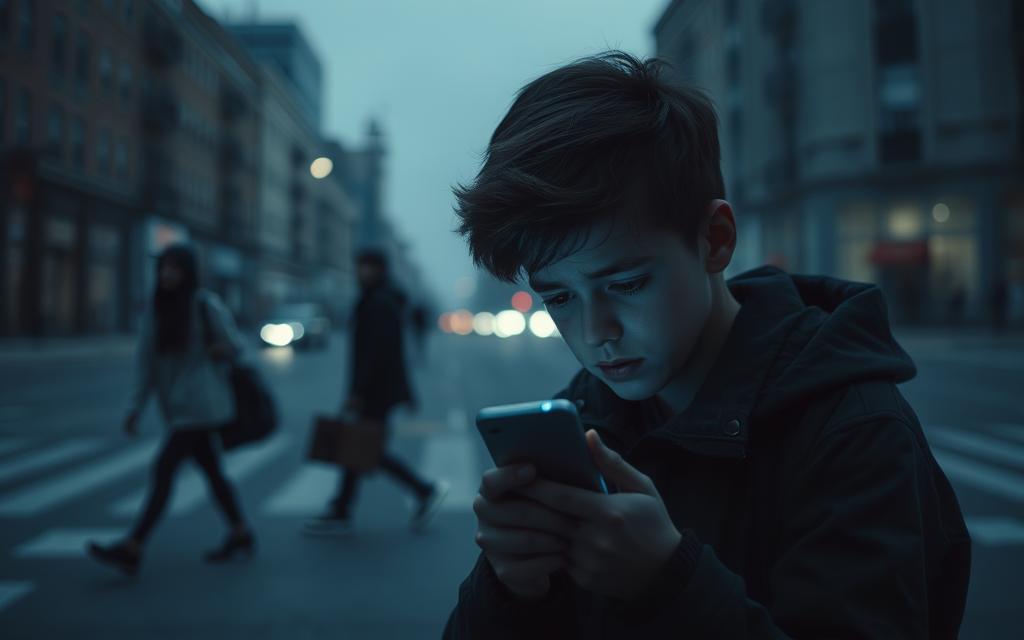
“Digital exchanges often replace face-to-face interactions, sometimes leading to misinterpretations and a sense of detachment. And as we rely on screens, the quality of our connections can diminish.”
Without non-verbal cues, misunderstandings can happen more often. Not being able to read body language is a big technology social skills negative effect found in recent studies.
Erosion of Conversation Depth and Quality
Digital communication values quickness over depth, making deep talks rare. This affects both personal and work relationships.
The prevalence of superficial digital exchanges
Today’s communication tools push for short, simple exchanges over long, detailed ones. Texts, social media, and emails tend to be brief. This makes superficial digital communication the norm.
Impact on meaningful dialogue and relationship building
Real, deep conversations need time, focus, and emotional presence. These are often missing in digital chats. The constant distraction of notifications and the urge to multitask during digital talks also lower their quality.
Relationships built mainly online often lack the depth and strength of those formed in person. The ongoing impact of these changes is a big challenge to our social skills.
The Attention Economy and Its Social Consequences
Digital platforms have changed how we use our attention, leading to the attention economy. This model focuses on keeping users engaged, often at the cost of real social interaction. Our ability to connect with others is suffering as technology takes more of our mental energy.
Constant Distractions and Divided Attention
Today’s devices interrupt us all the time, even when we’re talking to others. Studies show that just having a phone nearby can make our conversations less rich, even if we’re not using it.
Multitasking during social interactions
Many of us split our attention between talking and using our phones. This multitasking social interactions makes us less present and less engaged. Research shows we remember less from conversations when we’re also using devices.
The phone as a physical barrier in conversations
Smartphones act as a barrier between people, often placed on tables or held during talks. This physical barrier shows we’re not fully there, making conversations feel less intimate. It’s seen as rude, leading to less satisfaction in our interactions.
Shortened Attention Spans and Conversation Patience
Digital content has made us expect fast communication. Platforms that focus on quick updates have trained us to prefer short, snappy messages over in-depth talks. This has changed how we have conversations in real life.
Preference for quick messages over extended discussions
Now, many of us prefer quick texts over long talks. This is because of our shortened attention spans from social media and messaging apps. We’ve lost patience for detailed conversations that need our full focus.
Difficulty maintaining focus during real-world conversations
It’s getting harder to stay focused in face-to-face talks without digital distractions. Too much screen time makes it hard to have deep conversations without getting distracted. This is a big attention economy social consequence that affects how we develop socially.
| Behaviour Pattern | Social Consequence | Impact Level |
|---|---|---|
| Device checking during conversations | Reduced conversational depth | High |
| Preference for text over voice communication | Diminished emotional connection | Medium |
| Multitasking during social gatherings | Weakened group cohesion | High |
These patterns show how the attention economy values metrics over human connection. The overall effect is a big challenge for keeping meaningful relationships in today’s digital world.
Non-Verbal Communication Skills in Decline
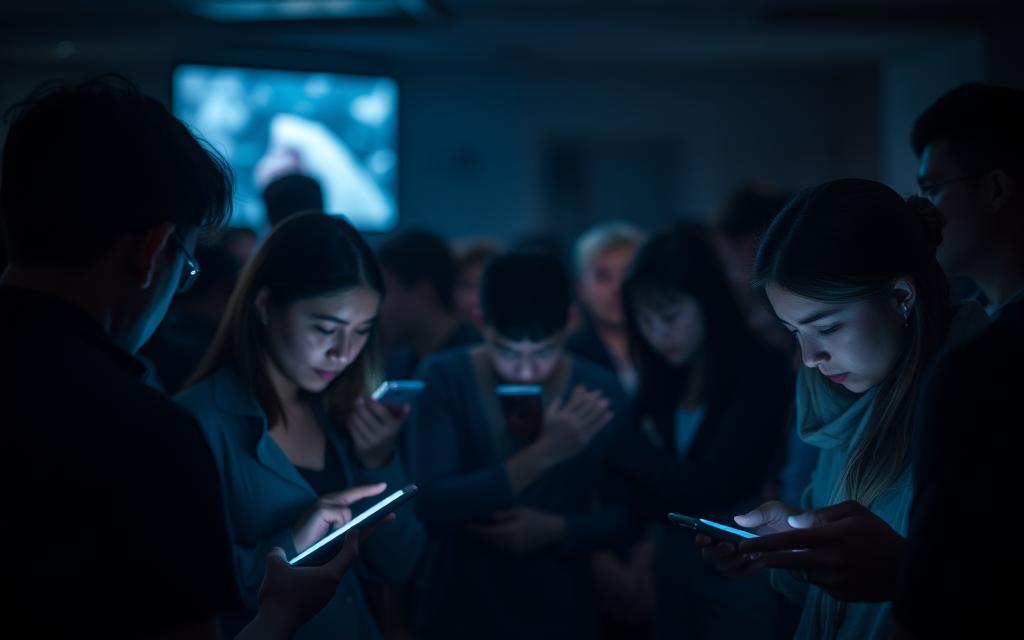
Digital interactions are now our main way of talking. This has led to a worrying drop in non-verbal skills. Our ability to connect deeply beyond screens is suffering.
The Loss of Body Language Interpretation
Digital chats take away the rich signals we usually get in person. Without practice, reading these cues becomes much harder.
Reduced practice reading facial expressions and gestures
Meeting people face-to-face helps us learn to read emotions and body language. Digital chats take away this chance, leaving us less skilled in real life.
Younger people are getting worse at reading emotions from faces. This body language interpretation loss is clear in both work and personal life, where understanding is key.
Over-reliance on emojis and digital expressions
Emojis help us show feelings online, but they’re not as deep as real human talk. They can’t show the full range of emotions or the context of a situation.
As one study points out:
“Digital approximations fail to capture the layered nature of human expression, leading to flattened emotional exchanges.”
Voice Tone and Inflection Misinterpretation
Text chats miss out on the tone and emphasis we get in voice calls. This can lead to misunderstandings, as what we mean can be lost in translation.
Challenges of text-based communication without vocal cues
Written messages lack the voice variations that show emotion and intent. This makes it hard for readers to understand what’s meant, leading to wrong guesses.
The non-verbal communication decline is clear when simple texts cause big arguments. Without tone, even calm messages can seem harsh or rude.
Increased misunderstandings in digital exchanges
Studies show digital chats misunderstand things three times more than talking face-to-face. These text communication misunderstandings hurt relationships and cause stress.
Many workers spend a lot of time sorting out misread digital messages. This shows how far our digital and real-life talking skills have diverged.
Social Anxiety and Digital Dependency
Modern technology has created a paradox. Our constant connection often leads to more social isolation and anxiety. The devices meant to bring us closer can actually make us feel further apart.
The Screen as a Social Crutch
Now, many use digital devices as emotional safety nets in social situations. This change shows how we interact with others differently.
Using devices to avoid uncomfortable social situations
Smartphones and tablets have become our modern security blankets. People often turn to their screens when they feel unsure or uncomfortable in social situations.
This habit gives quick relief but hinders the growth of important coping skills. Over time, it makes social anxiety worse instead of helping it.
Preference for digital communication over in-person interaction
Many prefer texting or messaging over talking face-to-face. Digital communication seems to offer control over timing and content.
This preference leads to a worrying trend of digital dependency. It means virtual interactions are replacing real-world social interactions. The ease of digital communication comes at the cost of essential social skills.
Increased Social Anxiety in Real-World Settings
Research shows a link between screen time and social discomfort. The more time spent online, the harder it is to interact in real life.
Research linking screen time with social discomfort
Studies have found that more device use is linked to higher social anxiety. A detailed analysis showed:
| Daily Screen Time | Reported Social Anxiety | Preference for Digital Communication |
|---|---|---|
| 0-2 hours | Low (15%) | 20% |
| 3-5 hours | Moderate (35%) | 45% |
| 6+ hours | High (62%) | 75% |
As researchers note,
“Excessive addiction to the Internet can also trigger people’s depression, anxiety, and emotional impulsivity, resulting in a poor psychological state and even social phobias.”
The paradox of being “connected” yet socially isolated
Many feel a strange contradiction. They have hundreds of online connections but feel deeply alone. This is a key issue in modern social anxiety technology.
Digital interactions lack the emotional depth and nonverbal cues of face-to-face talks. This can make people feel isolated, even when they’re connected all the time.
One study participant said, “I have 500 friends online but nobody to have coffee with.” This captures the essence of the paradox we face today.
The relationship between technology and social anxiety is complex. Understanding this is key to developing healthier digital habits and keeping our social skills sharp.
Empathy Deficit in the Digital Age
Our digital world is changing how we connect emotionally. This has led to a worrying lack of empathy. The empathy deficit digital age shows how hard it is to feel and share emotions online.

Reduced Opportunities for Empathic Responses
Screen-mediated communication makes us feel less connected. It’s hard to really understand someone’s feelings when we’re not face-to-face.
Distance created by screen-mediated communication
Being apart in digital talks takes away important emotional signs. We miss out on facial expressions and body language that help us connect.
The challenge of conveying empathy through text
Text can’t fully express emotions. Words can’t replace the warmth of a voice or the comfort of being together.
“Online relationships may lack emotional connection. Physical presence helps in better understanding and empathy.”
Desensitisation Through Digital Interactions
Being online too much can make us less emotional. This is a big problem for young people who are learning about feelings.
Impact of anonymous online behaviour on empathy development
Anonymous online behaviour lets people act without thinking about others. This can lead to actions we wouldn’t do in real life.
Comparison of empathic responses in digital versus real-world scenarios
Research shows big differences in empathy online and in real life. Online, we tend to show less emotion.
Seeing violent content online can make us less empathetic. This shows how digital spaces can affect our feelings.
Different online places affect empathy in different ways. Some help us understand, while others make us feel distant.
The effects of these empathy gaps are serious. They can harm our social bonds and relationships. Spending more time online might make us lose touch with our emotional side.
Generational Differences in Social Skill Development
Technology has changed how we develop social skills, showing big differences between generations. Digital natives, who grew up with the internet, learn social skills in a unique way. They are different from older generations who learned to use technology later.
Research shows that digital natives often prefer online interactions to talking face-to-face. They are good with digital tools but might find it hard to understand traditional social cues. Kids who spend too much time on computers can struggle with eye contact and keeping conversations flowing.
There are also gaps in how different generations use technology to communicate. Older people tend to be better at social skills offline but are learning to use digital tools. This makes it hard for people of different ages to communicate well because of their different comfort levels with technology.
Younger, urban people who are good with the internet seem to benefit more from it. This shows that technology’s impact on social skills depends a lot on when you started using it and how well you understand it.
Knowing about these differences helps us find better ways to teach social skills in our digital world.
FAQ
How has the digital revolution changed the way we communicate?
The digital revolution has changed how we talk to each other. We now use digital ways like WhatsApp and social media more than old methods like letters. This change has made our conversations faster but sometimes less meaningful.
In what ways does technology diminish face-to-face interactions?
Technology is replacing face-to-face talks in many areas. Things like video calls and emails are taking over. This means we miss out on important skills like reading body language and having deep conversations.
How does the attention economy affect our social skills?
The attention economy, with sites like Facebook, makes us easily distracted. This makes it hard to focus and have long talks. Studies show that using devices during chats makes conversations less satisfying.
Why are non-verbal communication skills declining due to technology?
Not using our faces and bodies as much in digital chats makes us worse at reading them. Emojis and texts can’t replace the real thing. This leads to misunderstandings, more in digital chats than in person.
Does technology contribute to social anxiety and dependency?
Yes, screens can make us avoid real-life situations. Spending too much time online can make us more anxious. Sites like TikTok can make us feel connected but also lonely.
How does technology impact empathy in communication?
Digital chats can make us feel less connected, making it harder to show empathy. Texts can’t show emotions as well as voices or faces. This can make us less empathetic, which is worse for those who use digital media a lot.
Are there generational differences in how technology affects social skills?
Yes, there are big differences. People who grew up with the internet use digital media more and have different social skills. Older people might find it harder to keep up with these changes.
Can technology’s negative effects on social skills be mitigated?
Yes, we can try to balance our digital use with real-life interactions. Learning to use technology wisely and making time for face-to-face talks can help. It’s different for everyone, depending on how they use technology.
