


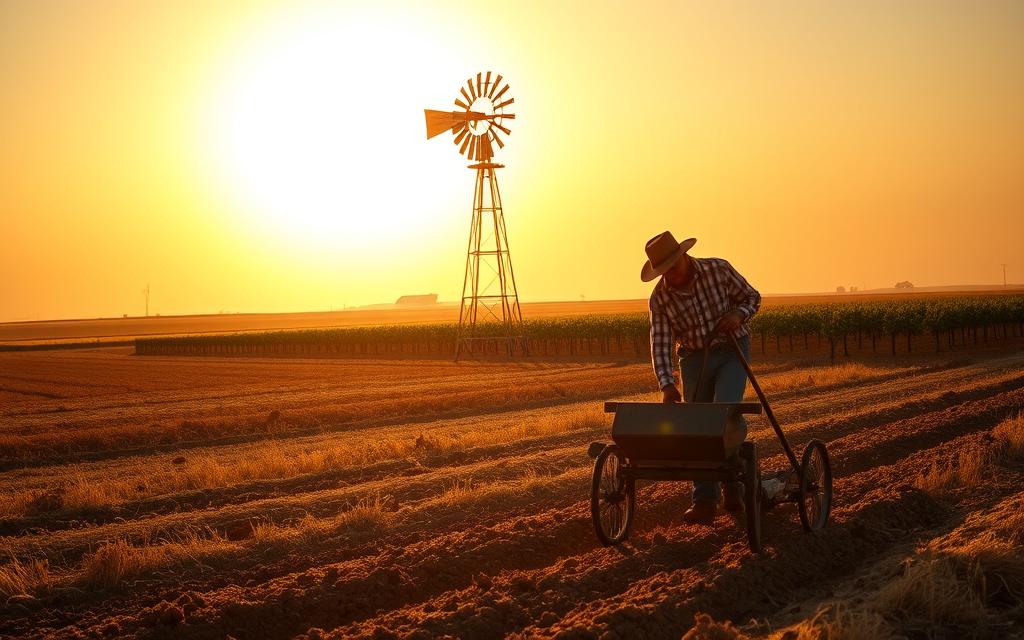
After the American Civil War, hundreds of thousands of settlers moved to the Great Plains. They saw a vast area that many thought was useless for farming.
But, thanks to agricultural innovation, this view changed. The steel plough and mechanical windmill were key. They changed how farming was done on the prairie.
These tools made hard land into fertile fields. They helped settlers deal with the region’s tough conditions. This changed the Plains forever.
This story is a big part of America’s farming history. It shows how clever ideas can make even tough places workable.
The Great Plains Agricultural Challenge
Farming the American Great Plains was tough for settlers. They faced challenges unlike those in the east. The vast prairie needed new farming ways because of its unique environment and old methods.
Geographical and Environmental Obstacles
The Great Plains were huge and had special challenges for farming. The soil was thick and hard, making it hard to farm. This was because of the dense grass roots that tools couldn’t get through.
Water was also a big problem. Rainfall was not reliable, making summers dry and threatening crops. There was little water from rivers or streams for irrigation, making water hard to find.
Building homes was hard too. There were few trees, so wood for houses and fences was scarce. Farmers had to find new ways to build, unlike in the east.
Related Posts:
- How Technology Has Affected Culture Shaping Modern…

- Should We Use Technology in the Classroom The Modern…

- A Technological Innovation in Healthcare…

- How Does Plasma Technology Work From TVs to Medical…

- How to Get Into Technology A Beginner's Career Guide

- What Is GaN Technology in Chargers Gallium Nitride…

Traditional Farming Methods’ Limitations
Eastern farming ways didn’t work well in the Great Plains. Cast iron ploughs got stuck in the heavy soil. This made farming slow and hard.
The Homestead Act of 1862 gave land to settlers. But, it didn’t help with the lack of good farming tools. Many struggled to farm enough to keep their land.
Old ways of getting water didn’t work either. There was no easy way to reach deep water. New methods were needed to solve this problem.
| Challenge Category | Specific Obstacle | Impact on Farming | Traditional Solution Failure |
|---|---|---|---|
| Soil Conditions | Thick prairie sod | Plough clogging and inefficiency | Cast iron ploughs ineffective |
| Water Resources | Limited rainfall | Irrigation difficulties | Surface water methods failed |
| Building Materials | Wood scarcity | Construction limitations | Eastern building practices impractical |
| Government Policy | Homestead Act requirements | Cultivation deadlines | Inadequate technology for compliance |
The challenges were too much for 19th century technology. The tools and methods that worked elsewhere failed on the prairie. This gap made it hard for the Homestead Act to succeed. It showed the need for new ideas to change farming on the Great Plains.
How Did New Technology Help Farmers on the Great Plains
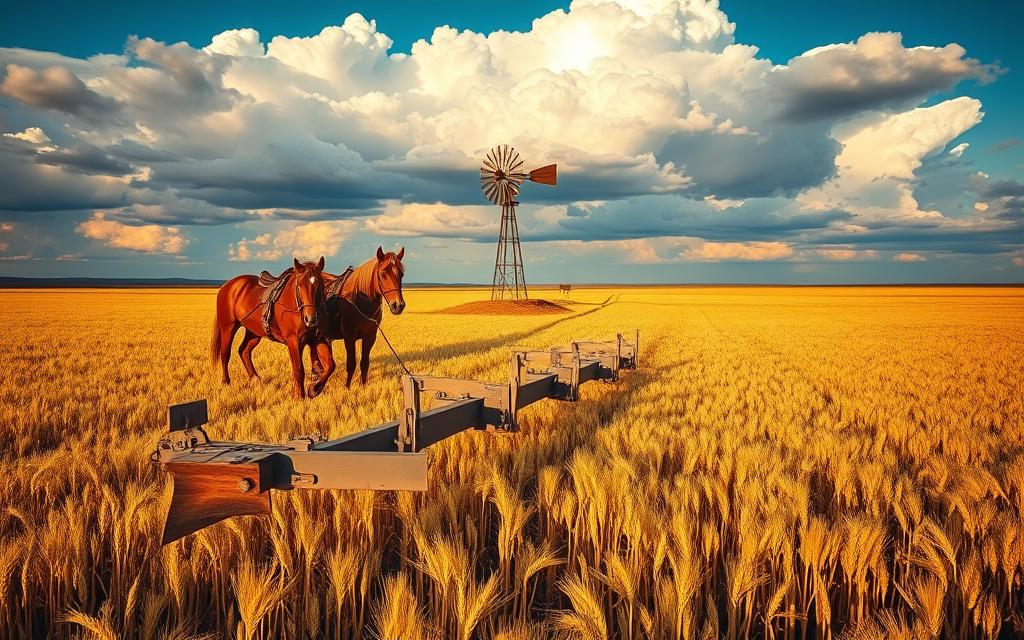
The late 19th century saw a big change in farming on the Great Plains. New technologies solved old problems, changing how farmers worked with the land.
The Technological Revolution in Agriculture
Agriculture changed a lot during this time. Farmers got tools that made their work easier and more productive. This change touched many parts of farming.
Key advancements included:
- Improved soil preparation equipment
- Enhanced irrigation systems
- Better harvesting machinery
- More efficient transportation methods
These technologies helped create a better farming system. Together, they made farming on the Plains possible.
Addressing Specific Great Plains Challenges
The Great Plains had unique challenges that needed special solutions. Old farming tools didn’t work well with the hard soil and dry climate. So, new technologies were made just for these conditions.
The steel plough was a big step forward in farming. It could cut through thick sod without needing to be cleaned often. This saved farmers a lot of hard work.
Companies like John Deere led the way with equipment for the Plains. Their tools were key for farmers to start farms in new areas. These reliable tools made big farming possible.
Water management also got better. Wind-powered pumps and better well-drilling helped with water scarcity. These improvements helped with crops and animals.
The Evolution of Plough Technology
Agricultural innovation was key to taming the American West. Farmers needed tools that could handle the unique soil conditions. This need led to big changes in plough design, from simple wooden tools to advanced metal ones.
From Wooden to Iron Ploughs
Early settlers used wooden ploughs on the frontier. These tools worked well in the lighter soils of the east. They were light and easy to fix with basic materials.
As farming moved west, iron ploughs replaced wooden ones. Blacksmiths made these with cast iron mouldboards and shares. They were stronger and could handle tougher soils.
Iron ploughs were a big step forward in farming tech. They could cut through roots and handle rough conditions. This helped early Great Plains settlement by providing reliable tillage tools.
The Limitations of Early Metal Ploughs
Iron ploughs had big problems in prairie conditions. The thick, rich soil of the Great Plains was hard to work with. The soil’s high clay content made it stick to metal.
Cast iron plough blades often got clogged. The sticky soil stuck to them, needing frequent cleaning. Farmers lost a lot of time cleaning their equipment every few yards.
The table below shows the main problems with early metal ploughs in the Great Plains:
| Problem Area | Impact on Farming | Frequency of Issue |
|---|---|---|
| Soil adhesion to metal | Required constant cleaning interruptions | Every 5-10 metres of ploughing |
| Blade clogging | Reduced ploughing depth and consistency | During every farming session |
| Increased draft requirement | Needed more animal power to pull equipment | Constant issue in heavy soils |
| Surface scouring | Incomplete soil turnover and poor seedbed preparation | Particularly problematic after rainfall |
These problems made farming hard. Farmers had trouble making good seedbeds for crops. The constant need to fix equipment lowered productivity and raised labour needs.
The search for better solutions led to big changes. These changes would change farming and help with windmill irrigation. The evolution of plough technology was key for Great Plains settlement.
Material science was important in solving these issues. New metal alloys and treatments were tried. The solution came from finding a new way to approach the problem.
John Deere’s Steel Plough Innovation
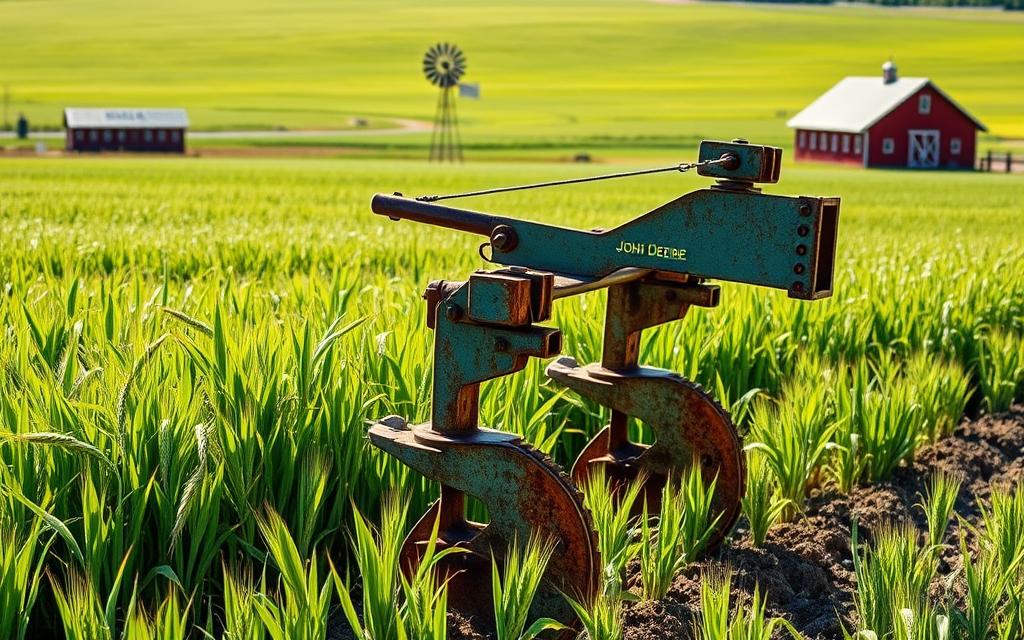
John Deere’s innovation was a game-changer for Great Plains farming. He tackled the long-standing issue of soil sticking to ploughs. This was a major problem for farmers.
Development and Design Features
John Deere started as a blacksmith in Illinois. He saw how hard it was for farmers with old iron ploughs. The sticky soil made it hard to keep going.
Deere tried polished steel, knowing it was better than cast iron. Steel was harder and smoother. This made it easier to cut through the soil without getting stuck.
The smooth steel surface was key to Deere’s design. It stopped soil from sticking, so farmers could work without stopping. This made farming more efficient.
Manufacturing and Distribution
At first, Deere made ploughs by hand. He paid close attention to each one to ensure quality. His early ploughs were a hit, showing there was a demand.
Mass Production Techniques
As more people wanted his ploughs, Deere started making them on a larger scale. He built factories and used new machines. This kept the quality high and made production faster.
Deere’s factories used new methods for shaping and polishing steel. They also had standard ways of putting the plough together. This made sure every plough was the same.
Accessibility for Farmers
Deere made sure his ploughs were available everywhere. He set up dealerships and found ways to get them to remote areas. This helped farmers all over the Great Plains.
Deere also made it easy for farmers to buy his ploughs. He knew they had limited budgets. This made his equipment more accessible, helping the agricultural revolution.
| Material | Soil Resistance | Durability | Maintenance Needs | Cost Efficiency |
|---|---|---|---|---|
| Wood | High | Low | Frequent | Poor |
| Cast Iron | Medium | Medium | Regular | Average |
| Polished Steel | Low | High | Minimal | Excellent |
Deere’s efforts made sure his ploughs reached farmers everywhere. This was key in changing farming in the Great Plains during the agricultural revolution.
Impact of Steel Ploughs on Plains Agriculture
Steel ploughs were key to successful farming in tough prairie conditions. They made farming easier where it was hard before.
Efficiency in Soil Preparation
Farmers saw big improvements in their work. The steel plough cut through soil easily.
Before, farmers could only work on one acre a day. But the steel plough doubled that. This meant they could farm more land.
Expansion of Cultivable Land
The steel plough opened up new land for farming. Land that was hard to farm before became easy.
Breaking Tough Prairie Sod
Prairie sod was the biggest challenge to farming. Its thick roots stopped old ploughs.
But steel ploughs were great at sod busting. They cut through the sod easily. This was key for farming the plains.
Increased Agricultural Productivity
With the right soil, crops grew better. The steel plough made the soil perfect for many crops.
Wheat and maize grew well with deep ploughing. Farmers could rotate crops over more land.
| Plough Type | Daily Acreage | Sod Breaking Capability | Labour Requirements |
|---|---|---|---|
| Wooden Plough | 0.5-1 acre | Poor | 3-4 workers |
| Iron Plough | 1-1.5 acres | Moderate | 2-3 workers |
| Steel Plough | 2-3 acres | Excellent | 1-2 workers |
The table shows the steel plough’s better performance. It changed farming on the plains.
Water pumping technology helped with irrigation. But the steel plough solved the land problem. Together, they helped farming a lot.
Successful sod busting led to more farming options. Farmers could raise livestock and grow crops in different areas.
The steel plough did more than just help farming. It made it possible to settle in places that were hard to reach before.
Water Challenges on the Great Plains
The Great Plains were a big challenge for farmers because of the need for reliable water. Unlike the east, where rivers and rain were common, the plains needed new ways to manage water. This was key for prairie farming to succeed.
Scarcity of Surface Water
The Great Plains were very dry, with little rain. Rainfall was between 300-600 millimetres a year, with summers being the driest. This made growing crops and caring for animals very hard.
There was very little natural water in the area. Only a few rivers went through the plains, and streams dried up in summer. This made finding water a big problem for farmers.
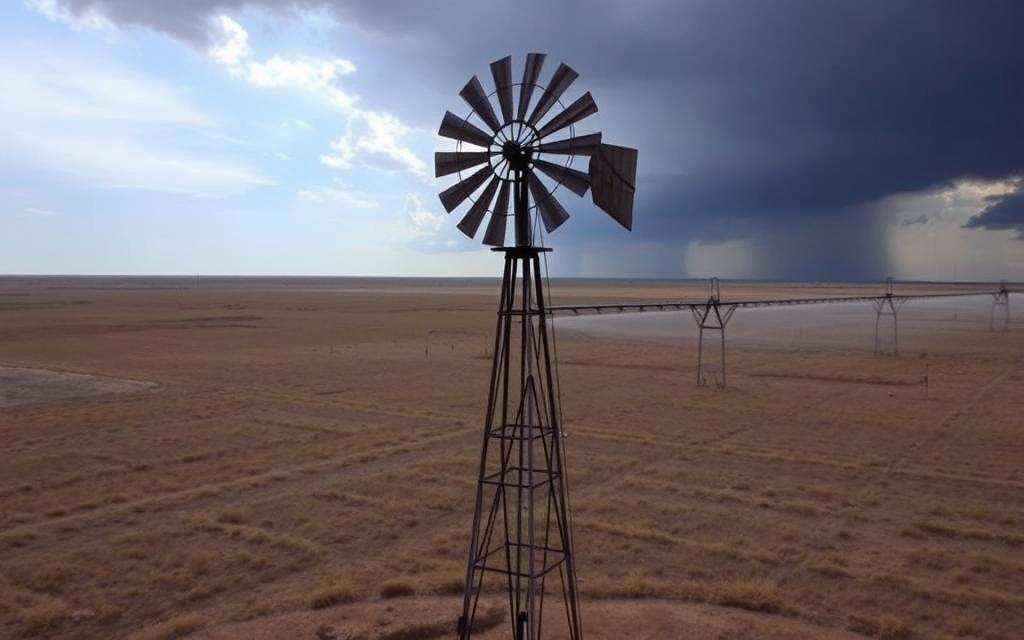
Farmers had to dig deep wells to find water. Drilling hundreds of feet deep was expensive and hard work. It showed how important water was for farming on the plains.
The Need for Reliable Irrigation
Crops and animals needed water all year. Without good irrigation, crops could fail. Making good irrigation systems was very important for prairie farming.
Water availability changed with the seasons. Places with more water got more settlers. Areas with less water were less populated until new technologies came along. This showed how water limited where people could settle.
The search for water led to big agricultural innovation in the area. Farmers tried many ways to get and store water. They knew that controlling water was key to farming on the plains.
| Water Source Type | Availability | Reliability | Access Difficulty |
|---|---|---|---|
| Surface Rivers | Limited | Seasonal | Low (where available) |
| Seasonal Streams | Variable | Unreliable | Moderate |
| Shallow Wells | Limited | Moderate | High |
| Deep Aquifers | Available | High | Very High |
This table shows the different water sources farmers had in the Great Plains. Moving to deeper water sources was a big step in agricultural innovation. It helped farmers farm the plains successfully.
Windmill Technology Development
The growth of windmill technology was a key breakthrough for settling the Great Plains. It helped make farming possible in areas that were once too harsh. This was thanks to the homestead act.
Early Windmill Designs and Limitations
First windmills from Europe didn’t work well in the Plains. They were made of wood and had fixed blades. These couldn’t handle the changing winds.
Keeping them in good shape was hard because of the dry air. Wood parts would warp and need fixing often. This made them not good for farms far from towns where water was needed all the time.
Innovations in Windmill Engineering
American engineers made big changes to windmill design. They created models that worked better in the Plains’ weather.
Improved Efficiency and Durability
They started using steel for important parts, making them last longer. New bearings and gears made them easier to keep running. This was a big step forward in 19th century technology.
Farmers could now pump water reliably without always having to fix things. This was a game-changer for farming.
Engineers found ways to deal with the Plains’ changing winds. They made blades that could adjust to wind speed on their own.
This kept them safe in storms and efficient in calm winds. Strong steel towers also helped them stand up to strong winds.
These changes made windmills last for years with little upkeep. They were key for getting water from deep underground across the plains.
Daniel Halladay’s Self-Regulating Windmill
John Deere changed farming with his steel plough. But Daniel Halladay tackled the Great Plains’ water problem. His windmill innovation was key for farming success in dry areas.
His design was a big step forward in windmill tech. Old models failed in strong winds or were slow in gentle ones.
Revolutionary Design Features
In 1854, Halladay patented a new windmill. It had a special system to adjust to wind changes.
When winds got stronger, the sails folded back. This kept the windmill safe and efficient.
The design had some key features:
- Centrifugal governor for automatic speed regulation
- Folding sail mechanism for storm protection
- All-metal construction for durability
- Direct pump connection eliminating gear systems
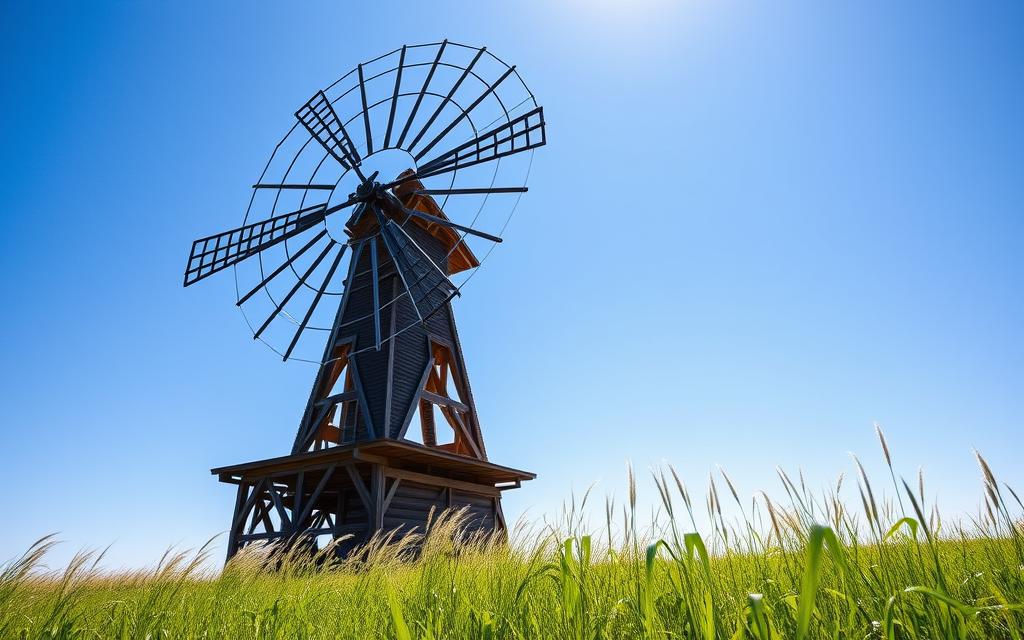
These windmills were made in standardised patterns. This made mass production possible without losing quality.
Commercial Success and Widespread Adoption
The Halladay Windmill Company started in 1854. It quickly became a big player in windmill production.
By the 1860s and 1870s, more windmills were shipped to the Great Plains. Railways helped get them to remote areas.
Farmers saw the windmill’s value right away. It made dry land into productive farms.
| Year | Windmills Installed | Average Depth Wells | Water Output (Gallons/Day) |
|---|---|---|---|
| 1860 | 500 | 30 feet | 800 |
| 1870 | 5,000 | 60 feet | 1,200 |
| 1880 | 25,000 | 100 feet | 2,500 |
| 1890 | 100,000+ | 150 feet | 3,800 |
By the 1880s, Halladay’s design was the top choice. Other makers followed his lead.
The windmill was as vital as the steel plough for the Great Plains. Together, they made farming possible in tough places.
Transforming Water Access with Windmills
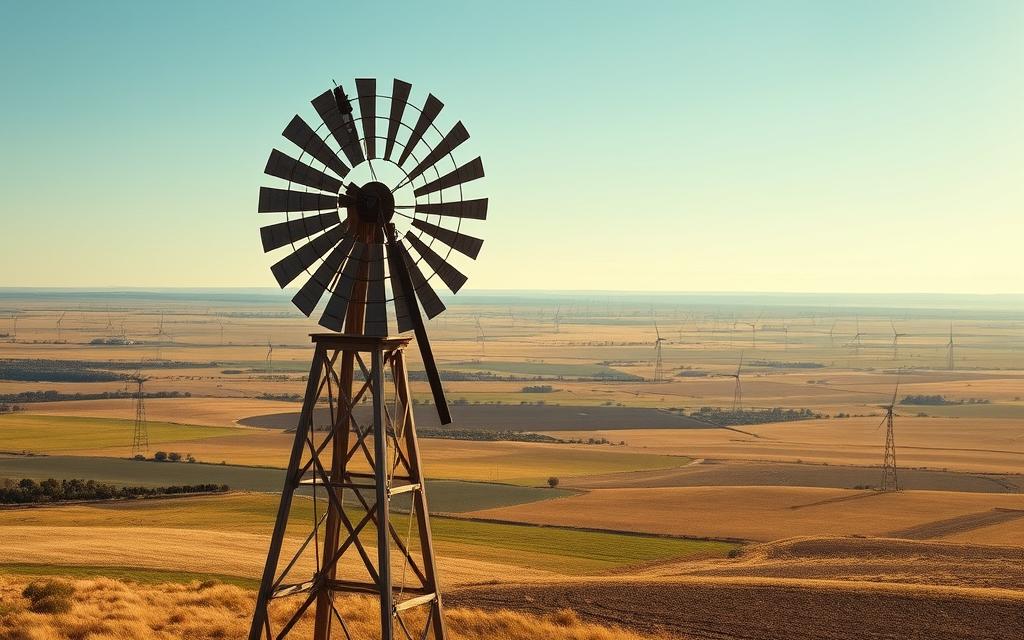
Windmill technology changed how people managed water in the dry Great Plains. It helped get to groundwater when surface water was hard to find. This was key for growing crops in the area.
Drilling Deeper Wells
Windmill pumps let farmers dig deeper wells than before. They worked well even when the wind wasn’t strong. This meant they could get water from deeper underground.
This made land that was once not good for farming now useful. Farmers could grow crops in places they couldn’t before. This helped more people settle in the Great Plains.
Supporting Livestock and Irrigation
Windmills helped with both animals and crops. They gave a steady water supply for bigger herds and more crops. This was a big help for farmers.
Cattle Ranching Expansion
Windmills helped the cattle industry grow a lot. Ranchers could keep more cattle over bigger areas. They knew they had water for their animals.
This made it easier to manage land and kept more cattle alive. One person said:
“The windmill has done more to develop the grazing resources of the plains than any other invention except barbed wire.”
Domestic Water Supply Solutions
Windmills also gave water for homes. This made life easier for families on farms. They had water for drinking, cooking, and cleaning.
They were easy to use, even without electricity. This made them very useful for windmill irrigation and home water needs in the frontier.
Today, these ideas are used in farming again. They are good for the environment and save money. The basic idea of using wind or manual power is used by farmers all over the world.
For more on how wind power is used in farming, check out this article: wind power in agricultural applications.
Economic and Social Impacts of Agricultural Technology
New farming equipment changed the Great Plains in big ways. It brought about economic and social shifts that changed the area’s future. These changes had effects that went far beyond the fields.
Farmers could now work on bigger areas with less effort. This change helped their finances and how they settled across the plains.
Increased Farm Profitability
Advanced tools cut down on labour and boosted output. Steel ploughs, for example, broke through tough soil faster than old tools. This saved time and led to more money.
Windmills made getting water easy without manual effort. Farmers could focus on growing crops instead of fetching water. This cut costs and raised profits.
With better tools and more land, farms became more stable. Families could rely on farming for a living, not just struggle to survive.
Population Growth and Settlement Patterns
Technology made living on the plains safe and sustainable for the first time. This drew thousands of settlers looking for new chances. The area became a thriving agricultural region.
Rail networks grew with farming communities. They were key for moving crops and supplies. This helped the area keep growing.
Westward Expansion Facilitated
The Homestead Act of 1862 gave 160 acres to anyone willing to farm it. This law worked well with new technology. It made land that was once hard to farm now usable.
Between 1862 and 1900, over 400,000 families got farms under the Homestead Act. This was a huge movement of people. Technology made moving westward possible and profitable.
Community Development on the Plains
Stable farms led to the growth of communities. Schools, churches, and businesses appeared where there were once just homesteads. The area’s prosperity brought social institutions.
Technologies like windmill-powered irrigation systems helped neighbours work together. This teamwork strengthened community bonds and made them more resilient.
| Technology | Economic Impact | Social Impact | Timeline |
|---|---|---|---|
| Steel Ploughs | 50% reduction in ploughing time | Enabled larger farm operations | 1840s-1870s |
| Windmills | Eliminated water hauling costs | Supported larger family settlements | 1850s-1890s |
| Rail Transport | Access to eastern markets | Connected isolated communities | 1860s-1900s |
| Homestead Act | Land ownership opportunities | Population growth catalyst | 1862-1900 |
The agricultural revolution on the Great Plains shows how technology can change societies. It started with better tools and ended with new communities and economies. This period is a strong example of how innovation drives progress.
Conclusion
The use of steel ploughs and advanced windmills changed farming on the Great Plains. These new tools helped farmers work in tough conditions. They turned hard land into fertile fields.
John Deere’s steel plough was great at breaking through thick grass. It made it easier for farmers to get their land ready. This allowed them to grow more crops on a bigger scale.
At the same time, Daniel Halladay’s windmill made getting water easier. It brought up deep water, helping with crops and animals. This was important because the area had little surface water.
These inventions made the Great Plains a place where farmers could thrive. Today, we see their impact in how we farm and in the growth of the American West.
