

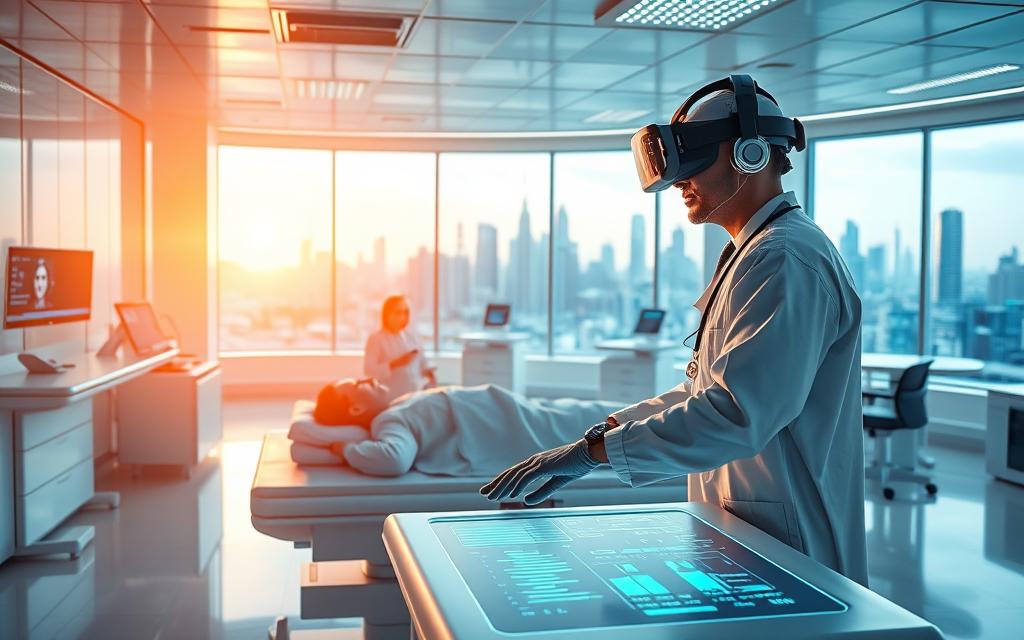
Healthcare is changing fast, thanks to digital health transformation. Telemedicine and AI diagnostics are leading this change. They are big steps forward in medical technology advancement.
These new tools help solve big problems like making healthcare more accessible and affordable. They also make services more efficient. The COVID-19 pandemic made us see how useful they are in real life.
Studies show AI works well in many medical areas. It can even help with things like detecting heart problems with smartwatches. Voice assistants also help patients feel more involved in their care. The proof of their success keeps growing.
This technological innovation healthcare isn’t just about updating old systems. It’s about making healthcare better for everyone. It makes quality care more available and effective.
What is a Technological Innovation in Healthcare
Technological innovation in healthcare means the ongoing development and use of new tools and systems. These changes improve medical practices and patient experiences. It includes digital platforms and advanced diagnostic tools that change how care is given and received.
At its heart, medical technology evolution is a big change from old ways to new, data-driven, patient-focused solutions. These innovations remove barriers, make treatment plans personal, and make healthcare systems more efficient. They also cut down on costs.
Today’s digital healthcare solutions come in many forms, each with its own role in the medical world:
- Telemedicine platforms for remote consultations
- AI-powered diagnostic systems for better accuracy
- Wearable technology for ongoing health checks
- Electronic health records for easier data access
- Robotic surgery systems for more precise operations
The journey of healthcare technology has moved from simple computer apps to advanced AI solutions. This change is one of the biggest in modern medicine. It changes how doctors diagnose, treat, and manage patients.
Related Posts:
- How Technology Has Affected Culture Shaping Modern…

- How Technology Negatively Affects Social Skills The…

- Haven Technologies New York A Look at the Insurance…

- Should We Use Technology in the Classroom The Modern…

- Has Technology Helped or Hurt Society Weighing the…

- How to Get Into Technology A Beginner's Career Guide
“The integration of technology in healthcare isn’t just about new devices—it’s about creating systems that make quality care accessible to everyone, everywhere.”
These innovations bring real benefits to healthcare. They allow for ongoing health monitoring, early disease detection, and tailored treatments. These were once impossible.
The table below shows different types of technological innovations and their main uses in healthcare today:
| Innovation Category | Primary Applications | Impact Level |
|---|---|---|
| Telemedicine Platforms | Remote consultations, virtual follow-ups | High |
| AI Diagnostic Tools | Medical imaging analysis, pattern recognition | Transformative |
| Wearable Technology | Continuous monitoring, preventive care | Moderate to High |
| Electronic Health Records | Data centralisation, care coordination | Essential |
| Robotic Surgery Systems | Precision procedures, minimally invasive operations | Specialised |
Digital healthcare solutions are great at creating connected systems. They make sure patient data moves smoothly between providers and facilities. This helps manage care better and lowers the chance of mistakes.
The real test of healthcare innovation is how it improves patient care while keeping costs down. Good examples show fewer hospital visits, quicker recoveries, and happier patients.
As technology gets better, medical innovation will reach new heights. We’re looking at genomics and nanotechnology, which will bring even more changes to healthcare.
The Evolution of Telemedicine in Modern Healthcare
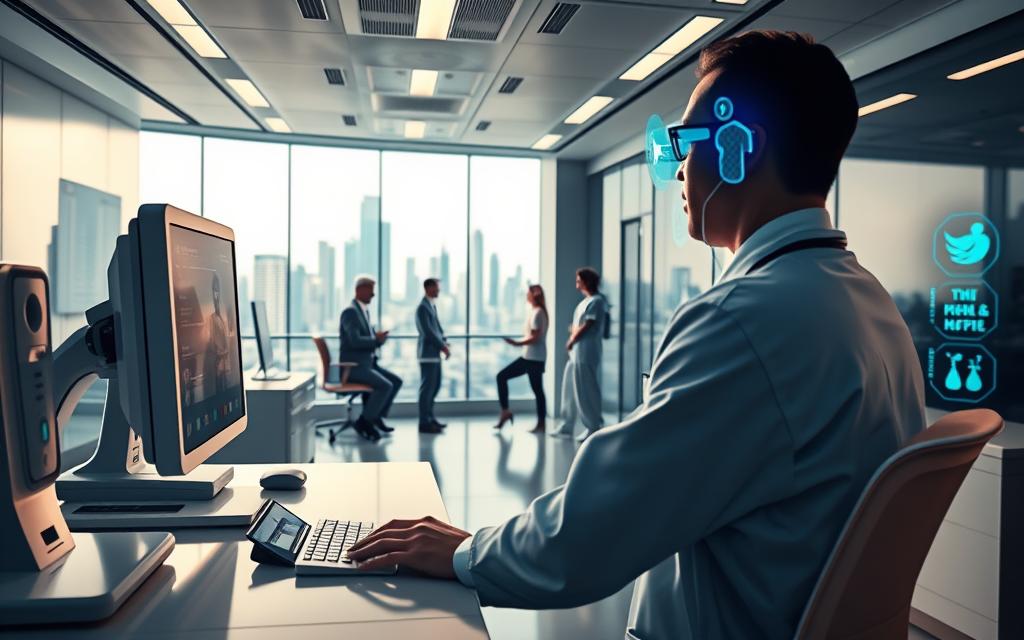
Telemedicine has grown from a new idea to a key part of healthcare. It has changed how patients get medical help and how doctors care for them from far away.
Early Telemedicine Systems and Their Limitations
The first telemedicine systems started in the 1960s. They helped people in remote or hard-to-reach areas. These early systems used basic phones and slow TV to share medical info.
These early systems had big tech problems. The video was poor, making it hard to see clearly. Also, many rural areas didn’t have good internet for these services.
Another big issue was that these systems didn’t work well with other medical records. Doctors had to keep separate records, which was a lot of work.
Many doctors were unsure if remote care was good enough. Insurance didn’t always cover telemedicine, making it hard for patients and doctors to use it.
Contemporary Telemedicine Platforms and Capabilities
Today’s telemedicine is much better. It uses fast internet for clear video calls that feel like being there in person.
Now, telemedicine has tools to check vital signs remotely. It can connect with devices like:
- Digital stethoscopes for heart and lung sounds
- High-resolution dermatoscopes for skin examinations
- Portable ECG monitors for cardiac assessments
- Digital otoscopes for ear examinations
These systems also work well with electronic health records. Doctors can see patient history and update records during calls.
The COVID-19 pandemic made telemedicine very important. It went from a special service to a key part of healthcare fast. Changes in rules and more insurance coverage helped it grow.
Now, you can get medical help through apps on your phone. This is great for managing long-term conditions and mental health.
Today’s telemedicine is safe and private. It uses strong security to protect your information. This makes sure your care is safe and private.
Artificial Intelligence Revolutionising Medical Diagnostics
Artificial intelligence is changing healthcare a lot. It helps doctors find, understand, and write down health issues better and faster.
Machine Learning Algorithms in Disease Detection
Machine learning is great at spotting patterns in big health data. It looks at patient info, genes, and past health to guess disease risks and help doctors decide.
In machine learning healthcare, algorithms find early signs of diseases like cancer and diabetes. They use data from health records, wearables, and lab tests.
Studies show ML is very good at guessing how patients will do. It helps doctors find patients who need help early.
| Application Area | Algorithm Type | Detection Accuracy |
|---|---|---|
| Cancer Screening | Deep Neural Networks | 94% Sensitivity |
| Cardiovascular Risk | Random Forest | 89% Precision |
| Diabetes Prediction | Gradient Boosting | 91% Accuracy |
Computer Vision for Medical Imaging Analysis
Computer vision medicine has changed radiology and pathology a lot. AI systems look at medical images very closely and always.
AI uses special networks to look at X-rays, CT scans, and more. It finds things that humans might miss because they’re tired or because they’re hard to see.
Research shows AI is as good as doctors in some areas like skin and eye checks. It gives doctors a second opinion, making them more sure and reducing mistakes.
Natural Language Processing for Clinical Documentation
Natural language processing makes sense of doctor’s notes and patient stories. It finds important info from what doctors write and what patients say.
NLP tools help doctors write less, freeing them up to do more. It turns what doctors say into official medical records during visits.
Intelligent chatbots and virtual assistants use NLP to talk to patients. They answer questions, book appointments, and give basic health info when clinics are closed.
The growth of AI medical diagnostics is fast, bringing new ways to find and treat diseases early. These tools help doctors, not replace them.
The Convergence of Telemedicine and AI Diagnostics
The mix of telemedicine and AI is a big step forward in healthcare. It combines two powerful tools to offer better care. This is thanks to remote diagnostics AI systems.
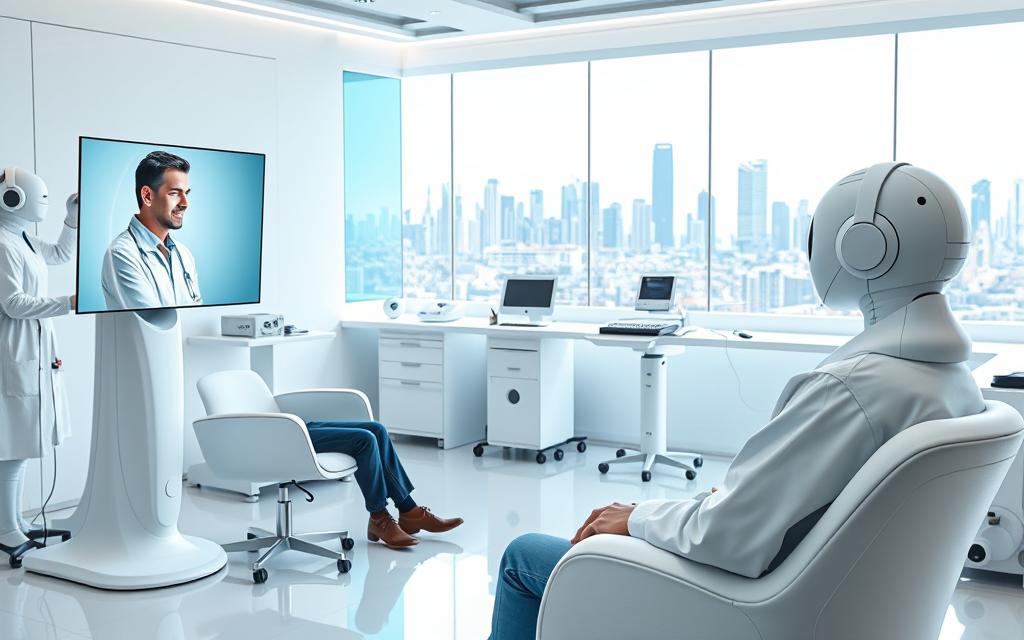
Integrated Platforms Enhancing Remote Consultations
Today’s healthcare platforms link virtual consultations with AI tools. They make virtual care as good as in-person visits.
These systems share data automatically and analyse it in real-time. This means doctors get useful information, not just raw data. It makes consultations more efficient.
Key features of these systems include:
- Automated symptom analysis before consultations
- Intelligent patient history compilation
- Seamless integration with electronic health records
- Automated follow-up and monitoring systems
This telemedicine AI integration starts care before the visit and keeps going after. It’s a continuous cycle.
Real-time AI Assistance During Telehealth Sessions
AI helps doctors during live sessions. It quickly looks at patient data and suggests diagnoses. It also spots risks.
AI looks at video, voice, and history all at once. This gives doctors a deep understanding of patients. It’s hard to do by hand.
Real-time telehealth artificial intelligence help includes:
- Instant diagnostic probability calculations
- Medication interaction warnings
- Pattern recognition in patient symptoms
- Automated documentation generation
AI helps doctors make accurate diagnoses and saves them from getting tired. It’s like having a second opinion. This ensures each case is thoroughly checked.
This change in healthcare is huge. Thanks to remote diagnostics AI and smart platforms, care is better, no matter where you are.
Benefits of Integrated Telemedicine and AI Systems
Telemedicine and AI together change healthcare for the better. They make medical services better, more accessible, and efficient. This mix tackles many healthcare problems and brings big improvements in quality and service.
Improved Diagnostic Accuracy and Speed
AI in telemedicine is very good at making diagnoses. It’s as good as doctors in many cases. This means patients get accurate diagnoses quickly, even when they’re not in the same room.
AI also works fast. It can look at medical images and data in seconds. This means doctors can make quick decisions during online consultations. It helps in planning the best treatment right away.
Enhanced Accessibility to Specialist Care
These systems make it easier for people to see specialists, even if they live far away. Doctors can talk to experts remotely and get help right away. This helps fill gaps in healthcare access.
It also makes the most of specialist time. One expert can help many places at once. This means more people get the care they need, no matter where they live. It’s good for the elderly, disabled, and those who can’t afford to travel.
Reduced Healthcare Costs and Resource Optimisation
Using telemedicine and AI saves money in many ways. It cuts down on hospital visits and keeps care quality high. Studies show it can cut healthcare costs by 15-30% by using resources better.
AI helps sort patients by how urgent they are. This means doctors focus on those who need it most. It makes care faster and better. It also means less unnecessary tests and referrals.
These systems also help healthcare organisations do more with less. They can see more patients without needing more staff or space. This makes quality care more affordable and available to more people. Telemedicine and AI work together to make healthcare better and cheaper.
Challenges and Considerations for Implementation
Telemedicine and AI diagnostics are promising, but they come with big challenges. Healthcare groups need to tackle several key areas to make these technologies work well.
Data Privacy and Security Concerns
Keeping health info safe is a major issue in digital healthcare. Patient data needs strong security to stop hackers.
Rules like HIPAA in the US and GDPR in Europe set strict data handling standards. These rules demand encryption, access controls, and breach alerts.
To keep data safe, we use end-to-end encryption, blockchain, and multi-factor authentication. These steps help secure telemedicine and AI use.

Healthcare providers must think about where they store and send data. Choosing the right cloud storage and network is key to keeping data safe.
Regulatory Compliance and Medical Device Certification
Telemedicine rules and getting devices certified are big hurdles. Regulatory bodies have strict approval processes for medical tech.
The FDA checks AI medical devices through clinical tests. Developers must show their tech works well for all patients.
Each country has its own rules for telemedicine. This means healthcare groups need to plan carefully to follow all laws.
| Regulatory Body | Approval Process | Clinical Validation Requirements | Update Protocol Requirements |
|---|---|---|---|
| FDA (USA) | Premarket approval | Multi-site clinical trials | Change control protocols |
| CE Mark (Europe) | Conformity assessment | Performance evaluation | Technical documentation |
| MHRA (UK) | UKCA marking | Clinical investigation | Post-market surveillance |
| TGA (Australia) | Inclusion in ARTG | Clinical evidence review | Ongoing monitoring |
Getting devices certified also means setting up rules for updates. Regulatory bodies want clear ways to check changes for safety and effectiveness.
Integration with Existing Healthcare Infrastructure
Adding new tech to old systems is a big challenge. Healthcare groups have to make sure new systems work well with what they already have.
Standards like HL7 FHIR help systems talk to each other. But, making everything work together takes tech know-how and sometimes custom solutions.
Changing how things work is also a big part of integration. Staff need to understand and use new systems without getting in the way of their work.
Training staff and managing change are key to success. Healthcare workers need to learn how to use new systems and see how they help patients.
Healthcare groups also need to think about hardware and network needs. Good telemedicine needs fast internet and the right devices everywhere.
Future Trends in Healthcare Technology Innovation
The world of medical care is changing fast. New technologies are changing how we see health and wellness. These changes aim to make healthcare more proactive and tailored to each person’s needs.
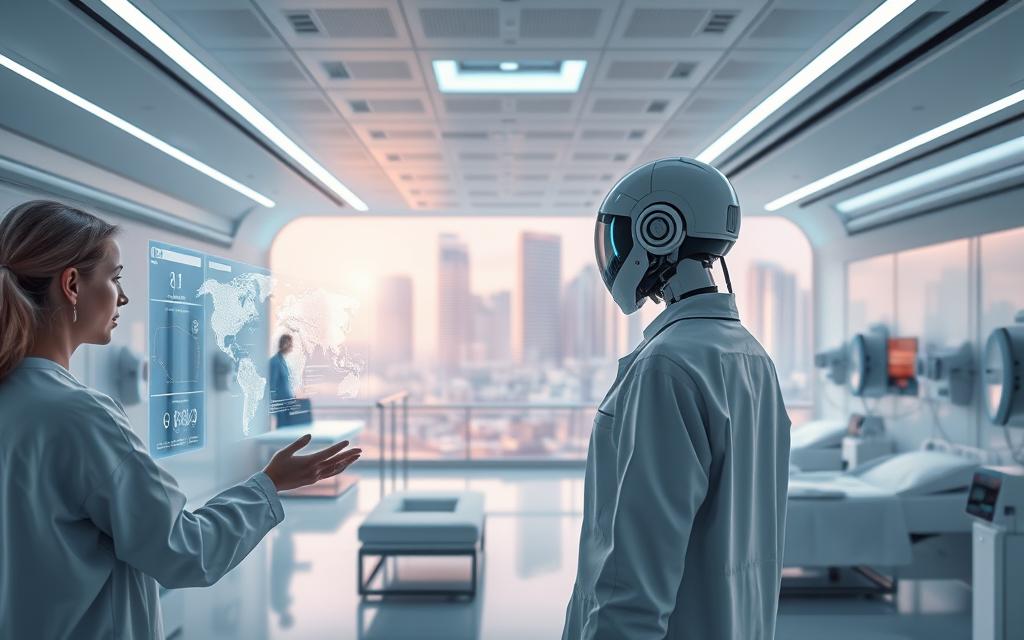
Predictive Analytics and Preventive Medicine
Now, advanced algorithms can spot patterns in huge datasets that humans might miss. This is the basis of predictive medicine. It uses artificial intelligence to predict health trends before symptoms show.
Studies show AI can predict heart problems with 85% accuracy from retinal scans. It can also forecast flu outbreaks six weeks early using search data and weather.
This means healthcare can move from treating to preventing problems. Patients get plans based on their own risk factors, helping avoid serious health issues.
Personalised Treatment Plans Through AI
The old days of one-size-fits-all medicine are fading. Personalised treatment AI looks at genetics, lifestyle, and how treatments work. It creates plans that are just right for each person.
These advanced systems look at:
- Genetic markers and metabolic profiles
- Real-time data from wearables
- How treatments worked for others like them
- Environmental and social factors
This leads to treatments that work better and have fewer side effects. It’s a big step towards medicine that really fits each person’s unique biology.
Expansion into Mental Health and Chronic Care Management
Technology is making big strides in mental health and managing chronic conditions. Telemedicine now uses AI to support patients between visits.
In mental health, AI looks at speech, typing, and facial expressions to spot early signs of depression or anxiety. It can alert doctors and offer help to patients right away.
For chronic conditions, remote monitoring tracks vital signs and how well patients stick to their treatment. AI uses this data to predict when problems might happen and suggest changes to treatment plans.
This shows how future healthcare technology is helping with ongoing conditions, not just short-term fixes.
Implementing Technological Innovations in Healthcare Organisations
Introducing new technologies needs careful planning and a clear strategy. Healthcare leaders must manage complex systems while keeping patient care at the heart of everything.
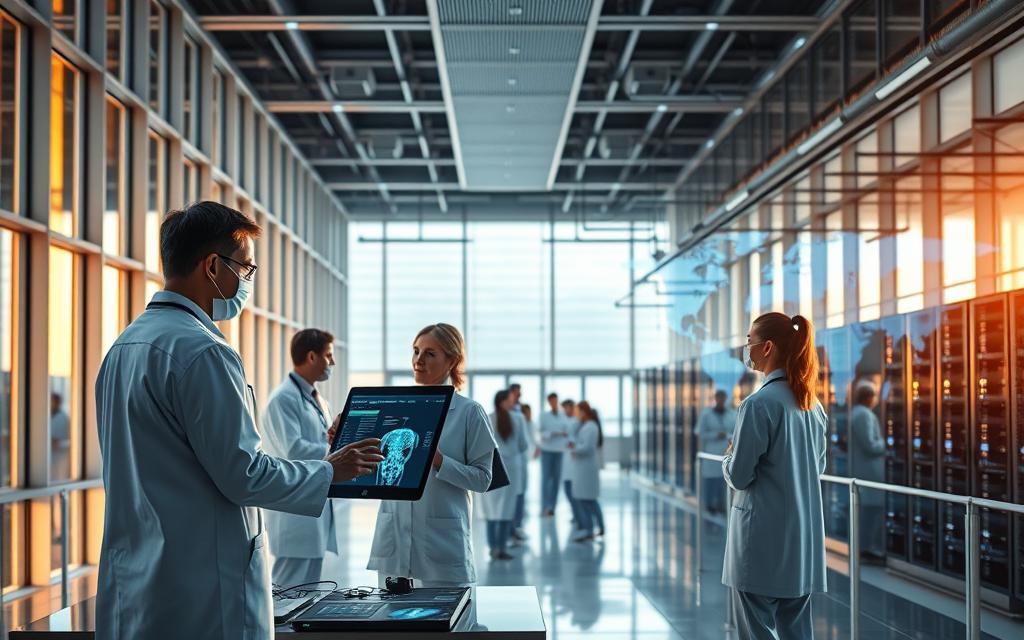
Staff Training and Change Management Strategies
Starting with staff training is key to successful technology adoption. Organisations should offer structured learning that covers both technical skills and adapting to new ways of working.
Important training areas include:
- Hands-on workshops with new technology platforms
- AI literacy programmes for clinical staff
- Change management certification for team leaders
- Continuous learning modules for ongoing skill development
Understanding resistance to change is vital. Organisations should talk openly and involve staff in planning from the start.
Measuring ROI and Clinical Outcomes
Measuring the value of new technologies is essential. Organisations need to look at both financial gains and how care improves.
Key areas to measure include:
- Clinical effectiveness metrics: diagnostic accuracy rates, treatment outcomes
- Operational efficiency: consultation times, resource utilisation
- Patient satisfaction: experience scores, engagement levels
- Financial performance: cost savings, revenue generation
Setting baseline measurements before starting is important. Regular checks help improve and adjust strategies.
Selecting Appropriate Technology Partners
Finding the right technology partners is critical. Healthcare organisations should look beyond just the technology’s features.
Criteria for evaluation should include:
- Regulatory compliance and certification status
- Data security protocols and privacy safeguards
- Implementation support and training resources
- Long-term maintenance and upgrade commitments
Good partnerships are built on clear communication and shared goals. Look for partners who understand healthcare and care about improving patient outcomes.
AI training healthcare partnerships should involve co-development. This way, clinical staff can help shape the technology. It ensures the tools support, not hinder, current best practices.
Conclusion
Healthcare is changing fast, thanks to new tech like telemedicine and AI diagnostics. These tools help make healthcare better by making it more accessible and affordable. They also make doctors more accurate in their diagnoses.
Telemedicine and AI together are a game-changer. They let doctors see patients remotely and get instant help from AI. This means better care for everyone. The use of AI in telemedicine is making a big difference in how diseases are found and treated.
The future of healthcare looks bright. We’ll see more care that’s tailored to each person and more focus on preventing illnesses. AI and predictive analytics will play a big role in this. But we must also think about keeping patient data safe and respecting privacy.
As we look to the future, we need to keep learning and using these new tools wisely. This will help make healthcare better for everyone. It’s a chance to make sure everyone gets the care they need, when they need it.
